We all know what the problems are. Overwork, presenteeism, constant emails and reactivity, lack of resourcing for complex pastoral needs, inadequate mentoring, non-transparent hiring, ever-changing research priorities, lack of opportunities, discrimination and internal bias, precarity, failure to confront the legacies of Covid…
Higher education is a mess. Despite being one of the most potentially rewarding sectors to work in, academics and HE staff are exhausted and demoralised, grimly pushing through whilst their health and wellbeing suffers. In 2017, 43% of UK academics sampled in a study had symptoms of mental ill-health, predominantly depression, anxiety, and burnout. [1] The following year, a Canadian study identified that two-thirds of academics will experience mental health issues at some point in their career, and highlighted specific pressures on junior faculty, especially those on non-permanent contracts, including anxiety and depression fostered by job insecurity, unclear hiring practices, and institutional marginalisation. [2] These stressors were compounded by experiences of discrimination affecting women and poc.
For PGRs, 26% of respondents to a Vitae report from 2018 had considered leaving their PhD programmes because of the impact on their mental wellbeing and life satisfaction. This figure increased markedly for those with a stated disability (48%), those with previously existing mental health conditions (60%), those who were part-time (36%), and was generally higher for female students. [3] Across the board, the issues highlighted were cultures of high achievement without showing weakness, a lack of safe spaces to discuss wellbeing, the failure of institutions to provide transparent routes for accessing support, embedded cultures of individualism and ‘resiliency’, and pervasive power imbalances and inequalities.
All of these pre-existing systemic issues have since been exacerbated by Covid, in particular for women, with gender inequality writ large as many female scholars stalled in their research under the brunt of additional care responsibilities. [4] The mental health charity Mind has highlighted that the pandemic deepened pre-existing experiences of inequality, stress, and burnout. [5] As one of my clients recently pointed out to me, HE was “a sector that carried on”, and post-pandemic academics and staff are back at work managing the long-term implications of digitised teaching without programmes of trauma support in place.
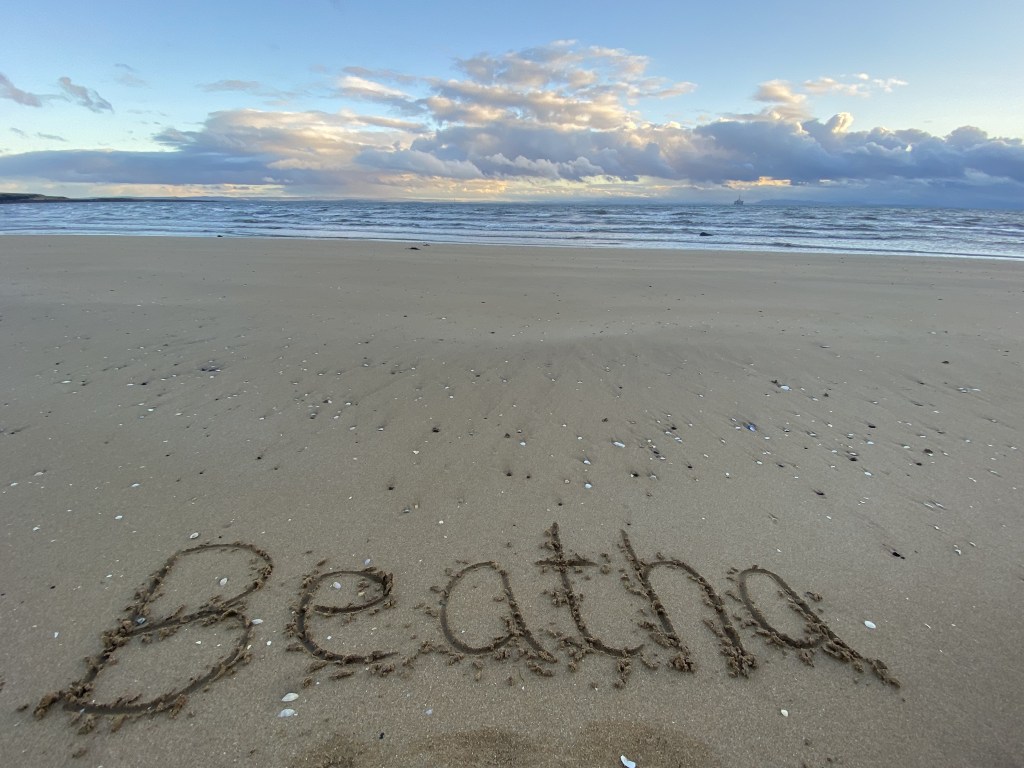
In 2022 I started Beatha Coaching with a set of core principles in mind. Having trained in life coaching at the University of Cambridge, whilst simultaneously lecturing and teaching at a Russell Group university, I had been struck afresh by the profound disconnect between normalised academic practices, and what we know about psychologically safe workplaces and mental health. Beatha Coaching emerged from my conviction that academic structures can only be as healthy as the people within them; that currently academia is failing to care for either the physical or mental health of those within it and upon whom it depends; and that drives for productivity, quality teaching, and original research will ultimately fail and fracture if wellbeing remains a low priority.
Above all, I believe that individuals matter. Not just their work and their WAM contribution, but the whole person and all that they bring of themselves to a role that requires deep resources of creativity, empathy, and humanity to do it well. Ironically, these exact qualities are the ones that often go first when an individual is in burnout. A burnt out brain cannot create because it is in a constant oscillation between reaction and exhaustion. Burnout profoundly affects our relationships with others, and our ability to see our struggles from a place of shared humanity. The dark side of burnout is the pattern of continued overwork that it often generates. Once you are in it, understanding what is and is not ‘normal’ becomes increasingly obscure, and isolation, whilst you struggle to survive, pushes you deeper into the mire. The mantra becomes, no one cares, just work harder.
Core principles
I built my approach for Beatha Coaching around three principles of practice that I believe are profoundly needed, and severely lacking, in the culture currently fostered in academia:
Coaching is a space where you can be heard, and learn to hear yourself again
I coach from the person-centred principle of unconditional regard and non-judgement. In contrast to the frenetic and performative environment of a university department, coaching gives you the opportunity to simply sit with your thoughts and a sympathetic trained listener, who will gently prompt you deeper whilst holding you in psychological safety. There is nothing to prove in coaching, because the focus and time is entirely about you. As you start to come back to your own voice, without the chatter, you can also begin to reframe your responses to yourself into more compassionate guides for future decision making.
In coaching you can reconnect safely with the lessons your body, mind, and emotions are trying to teach you
My approach is informed by insights from neuroscience, as well as cognitive behavioural therapy, and compassionate mind research. Coaching provides a safe place in which to draw your attention back to the full range of information your physical body and emotions are giving you. When absorbed in stress and burnout we can often disconnect from ourselves in an attempt to keep going. Coaching gives you the safety to reconnect with how you are actually feeling, and what you want to do about it.
Coaching is focused on helping you to find your own genuinely authentic solutions to negotiating toxic systems safely
Whilst profound systemic changes are necessary to really transform the environment in HE, coaching can help you to care for yourself by shifting the narrative from ‘this is how it has to be’, to ‘this is how I choose to respond’. Coaching gives you the space and time to reconnect with all aspects of yourself and your story, taking your vision wider than the normalised responses that dominate in academia. By examining your reactions and unquestioned assumptions with a listener who validates your experience whilst encouraging you to find more authentic responses, you can choose approaches to the challenges of HE which genuinely serve you and your wellbeing.
This week I felt that it was appropriate to reflect on the environment in academia that has lead to such widespread job dissatisfaction and mental health challenges, as well as to introduce my coaching in more detail. Going forward I will be offering coaching-based responses to some of the challenges that dominate the sector including burnout, anxiety, and stress management. If you have particular topics that you would like me to address, please post below or contact me via Twitter and LinkedIn, or by email at francesca@beathacoaching.org.
If you would like to work with me one-to-one you can find links to my packages above under ‘/work with me’, or send me an email enquiry.
[1] Govczynski, Hill & Rathod (2017) Examining the construct validity of the transtheoretical model in structuring workplace physical activity interventions to improve mental health in academic staff. EMS Community Medicine Journal: https://researchportal.port.ac.uk/en/publications/examining-the-construct-validity-of-the-transtheoretical-model-to
[2] Bourgeault, Montler & Power (2021) Mental health in academia: the challenges faculty face predate the pandemic and require systemic solutions. Academic Matters: https://academicmatters.ca/mental-health-in-academia-the-challenges-faculty-face-predate-the-pandemic-and-require-systemic-solutions/#:~:text=A%202017%20RAND%20Europe%20report,were%20depression%2C%20anxiety%20and%20burnout.
[3] Vitae/HEFCE (2018) Exploring wellbeing and mental health and associated support services for postgraduate researchers: https://www.vitae.ac.uk/doing-research/wellbeing-and-mental-health/HEFCE-Report_Exploring-PGR-Mental-health-support/view
[4] Krukowski, Jagsi & Cardel (2021) Academic productivity differences by gender and child age in science, technology, engineering, mathematics and medical faculty during the Covid-19 pandemic. Journal of Women’s Health: https://www.liebertpub.com/doi/full/10.1089/jwh.2020.8710
[5] https://www.mind.org.uk/coronavirus-we-are-here-for-you/coronavirus-research/
 Beatha Coaching
Leave a comment