Launching Mind-Body-Movement on Beathacoaching.org
Dear friends,
it’s the end of January, and Storm Éowyn is currently blowing across Scotland as a little reminder that winter isn’t over quite yet. Nonetheless, there are snowdrops starting to flower in sheltered corners of the garden, and the evenings are noticeably lighter. We have passed the darkest months, and made it through the start of a new year. In conversations with clients I’m noticing a trend emerging – desires for a slower pace of life and less connectivity, coupled with a slipping away of Christmas restfulness and a return to busy minds and calendars. In Beatha Coaching Community we have been exploring what rest and regulation can look like even in the midst of term-time, tuning in to writing for pleasure, and to embodied practices that help combat fatigue and stress. There is an evident frustration for many, that the structures of university life (where most of my clients work) does not allow for pacing based on individual needs. Holidays, and even honeymoons, have to be scheduled around the teaching timetable, and there is no margin in HE for anyone to go off sick. And yet, we all know that we need a different way of being, that maybe if the structures aren’t going to change then our values and priorities may need to shift, if we are going to keep our one precious life for ourselves.
I’m not immune to these pressures, even from outside the sector I still feel the tug to be doing all the time, productive and visible. In self-employment the visceral carrot and stick are, quite literally, earning or not earning. But after two years of really pushing myself to fill my time up, say yes to everything, to TRY things, I can feel that season is at an end. 2025 is a year of consolidating for me, tightening my focus and therefore my outputs into something fully in line with my values and core beliefs. I know that doing this will also benefit my health. I’m already noticing more moments of rest, of stopping to get a cake in the oven or do a quick tidy up, or taking an extra half hour on a walk, that I wouldn’t have allowed myself a year ago. I am slowing down and doing more purposeful work, and in turn that is leaving me the space to appreciate the difference that daily acts of mundane but pleasurable self-care can make.
A big, and unexpected, change in the last weeks has been my decision to switch from offering a free weekly class on YouTube to building a subscription model here on my website. I’m now offering monthly subscription for £3 to access a library of past yoga and somatic therapy practices with new material coming every week exclusively on the platform. More on this below, but before I get there a reminder that I am also still offering a free 30 day trial to Beatha Coaching Community for any women in academia or careers beyond the PhD who would like support and low-key sector specific coaching. Coming up we have group coaching next Friday 31st Jan at 2pm, which is always a fantastic, supportive conversation. And then co-writing continues into February with a requested workshop, Mindfulness for Academics, on Wednesday 12th at 1pm. For more information send me a message:


Rethinking how I offer Mind-Body-Movement
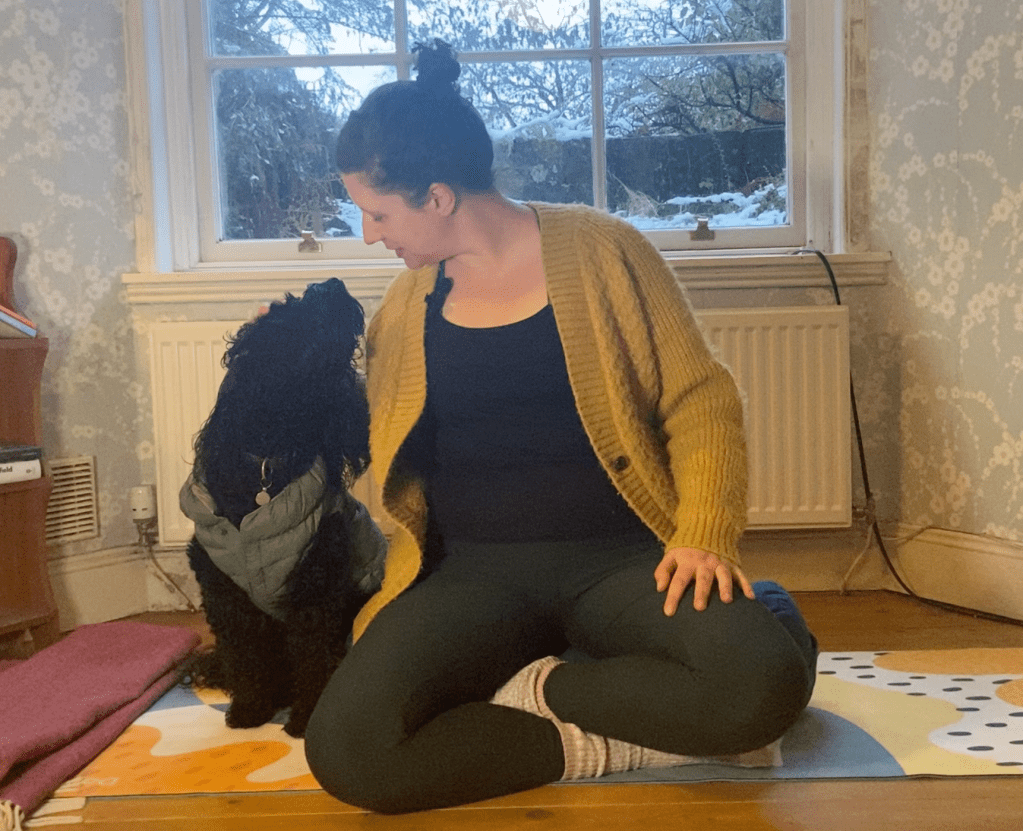
My new on-demand platform for yoga, functional mobility, and somatic therapy tools is now live, and you can subscribe here for just £3 a month (from May the price will go up to £5.99 a month). Inside the library you will find over fifty practises varying in length from 10 minutes to 45 minutes, in six categories: full body (where you’ll find morning and evening yoga classes as well as vinyasa and hatha style practices), upper body (covering breathwork, jaw, neck, shoulders, upper back, spine health and posture), lower body (including low back, hips, legs, feet, and core), fascia and restorative (my favourite blend of somatic and yin yoga classes focusing on therapeutic recovery and deep stretching), women’s health (for everything pelvic related and I’ll be expanding this section with pregnancy friendly classes, more for endo and pcos, and strength work for perimenopause and menopause), and mental health (a range of yoga flows and somatic therapy practices with meditation for stress, anxiety, burnout and grief). I’ll be adding new classes every week, which will appear on the main page for ease of access before going into a folder, and at least once a month I’ll run a live class for subscribers. I’m especially excited by the opportunity to design content for my members – I’ve already received requests for breathwork, strong shoulders work, and a flow for when you are very activated.
That’s all the details, and I hope if it appeals you’ll head here and subscribe for your launch offer of £3. But I also wanted to share some prose I wrote a few months ago, which now feels even more relevant as I build this platform into my core offerings. So for that longer read, scroll down. Otherwise, wishing you all the best for the remainder of the month and I’ll see you in February.
Francesca x
p.s. don’t forget to hit reply and let me know how you are doing, I love to hear from you.
from Substack…
I only know how to be in a white body.
When I move my body on the earth in the forms of yoga, I know I am moving in ways that came from other places and other bodies. I notice my paleness, and all the complexities of being white and western whilst teaching yoga to other white bodies. And I worry about the yoga studios proliferating around my Scottish town, and whether anyone from South Asia or Africa would feel comfortable in these spaces with their mixture of Buddhas and Vishnus and mandalas. This is colonialism, the absorption of other cultures for their aesthetic appeal without learning their significance or embracing their struggles. It is less visible when everyone in the room is white. We can accept the monoculture without being challenged.
My white body allows me into spaces that a body of colour might find less welcoming. It affords me safety and opportunity when others have to be aware. There is such a normalcy to middle-aged women having breakdowns and becoming yoga teachers that we barely raise an eyebrow – what, another one? Who are the highest rated online teachers – white women, by and large. With certain kinds of bodies, of course. I feel like a stocky shetland pony next to these leggy svelte ex-dancers with no tummy pushing past their waistband. But I still fit the model enough to put videos out and anticipate some viewers – because we like what we know, and what we know is white bodies moving.
I (obviously) believe there is value in these videos, because they make potentially healing practices accessible to anyone with an internet connection. I have noticed, though, that being explicit about yoga as a healing practice for body and mind does not draw people to classes. Only when we appear to separate the physical body from our emotional and mental state do people come (and mostly they are looking only for certain types of movement that they associate with exercise – muscular strengthening and stretching, and perhaps some joint mobility. Fascia, what’s that?). It is a quandary for me, that I want to be totally authentic about what I am offering, but to get people through the door (or to click on the icon) I have to market my practice as something else. We do not truly want yoga, we want a non-challenging quick fix to our stress. Come and soothe our white bodies before we go back to our busy lives.
I am also glad that yoga classes have become a safe space for women. And a way for women to find alternative careers and life paths. With rare exceptions, the participants in my classes are in female cisgendered bodies. We have a shared lexicon of embodied experience, the reality of living in and with these bodies and the legacies of how we were taught to relate to them. Yoga can help to unpack the stories around what is and isn’t possible, the inevitability of aging ungracefully, or the consequences of being female. We can learn to love our puckered skin, our rounds and curves, as we discover the simple movements that make embodiment a more lovely thing. There is agency in knowing that whatever the day brings, creaky joints can be soothed and fascia stretched through a few minutes on the mat. I want my sequences to be accessible, so recently, when I brought some fun new somatic play to the class that was too much for one lady, I was kicking myself. And I’m still kicking myself because she hasn’t come back since. I don’t think of myself as being particularly flexible, but I forget how long I have been doing these practices and the kind of transformations that happen through persistence.
One of the things I have been learning is that doing the same exact movements over and over again isn’t actually that good for us. Our brains love variety, so when we tweak our movements – trying a low lunge in a different way, using props, not holding a pose rigidly but flowing in and out of it – we start to generate new neural pathways. Those paths feel clunky at first, uncomfortable and uneven like our movements as we figure out how to adjust our balance and weight (and worry if we look silly). Familiarity is why we go back to old patterns again and again. But repeating the same movements generates rigidity, not flexibility. Many people find they are stalling with their progress a couple of years into a yoga practice. Often, they have been doing the same sequences or learning with the same teachers the whole time. A new approach or a different style suddenly opens up different possibilities, the body comes unstuck, progress is rediscovered.
Our bodies hold the stories of where we have been, what we have been told, and how we have spoken to ourselves. Those stories are wired in – thought A leads to thought B leads to C. Our bodies follow. We can reverse this, leverage our body-brain connection. Changing movements shifts how the body feels, how we inhabit it. That sends unexpected and unfamiliar signals back to the brain, to the regions that gather interoceptive information, and it starts firing different sequences of neurons. Patterns interrupt. The stories shift.

 Beatha Coaching
Leave a comment